
Skip to content

Property Guide

Dholera Land Price Trends 2026: What Buyers Should Know

Siddharth Patel

Property Owner

Published 16 September 2026 · 6 min read

Dholera Land Price Trends 2026: What Buyers Should Know

Price is the first question almost every buyer asks — and published figures vary so widely they can mislead more than inform. This guide explains how to weigh price information in the Dholera region without mistaking listings or claims for verified data.

Why price-trend questions matter

Almost every buyer evaluating land in the Dholera region asks the same first question: what is the price doing? It is a natural starting point. Price context helps a buyer judge whether a parcel is well positioned relative to surrounding areas and how it sits against historical movement.

This post explains how to read and weigh price information in the Dholera region — what makes some figures reasonably reliable and most others not. Treat it as a method for evaluation, not a substitute for verifying the specific parcel, whose price the owner discusses directly during genuine enquiry.

How reported prices are typically quoted

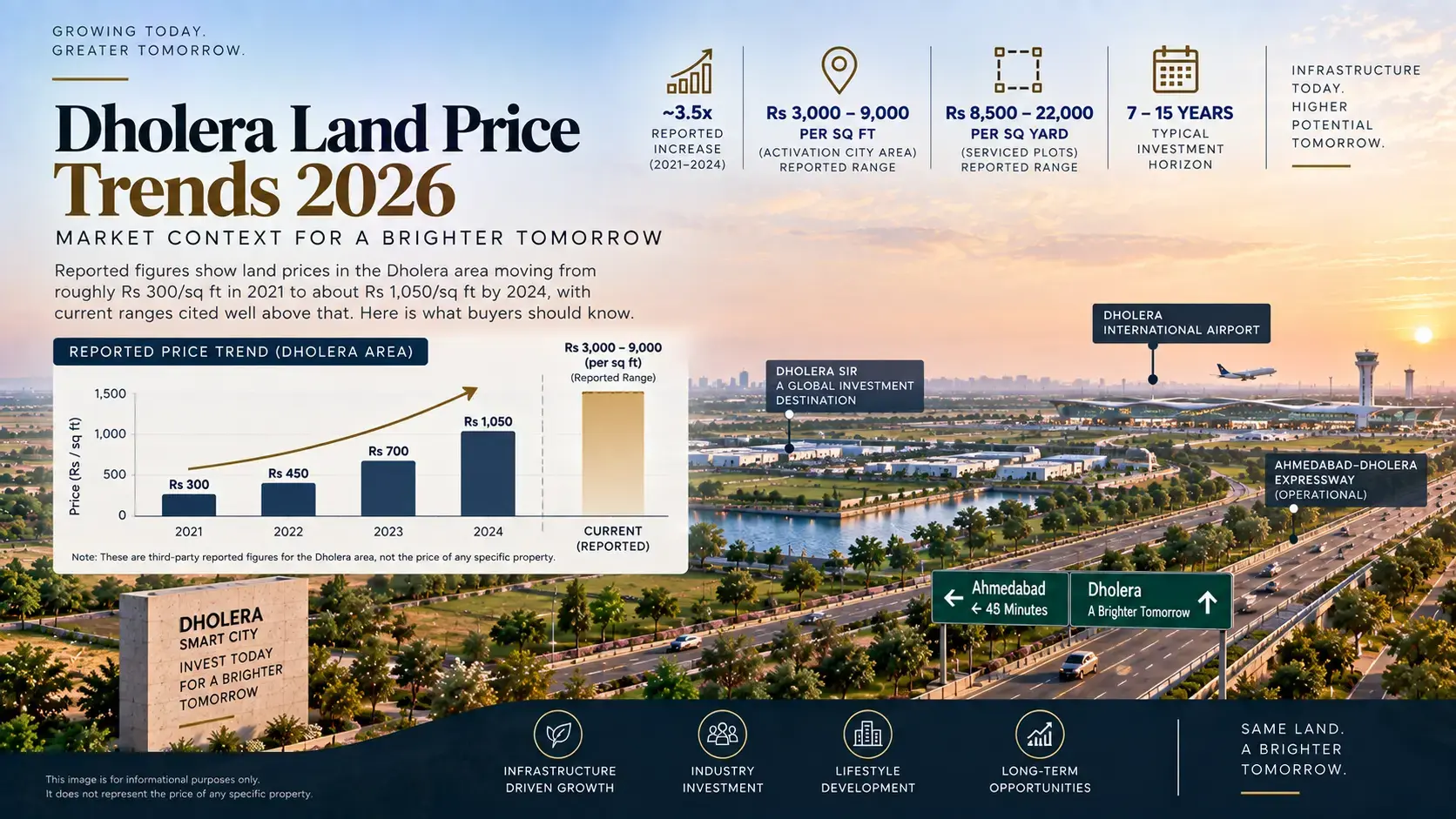
Third-party sources frequently claim that land prices in the Dholera area have risen substantially in recent years. The widely differing numbers different sources publish are themselves a warning: most quoted figures cannot be independently verified, and no single published number should be treated as authoritative.

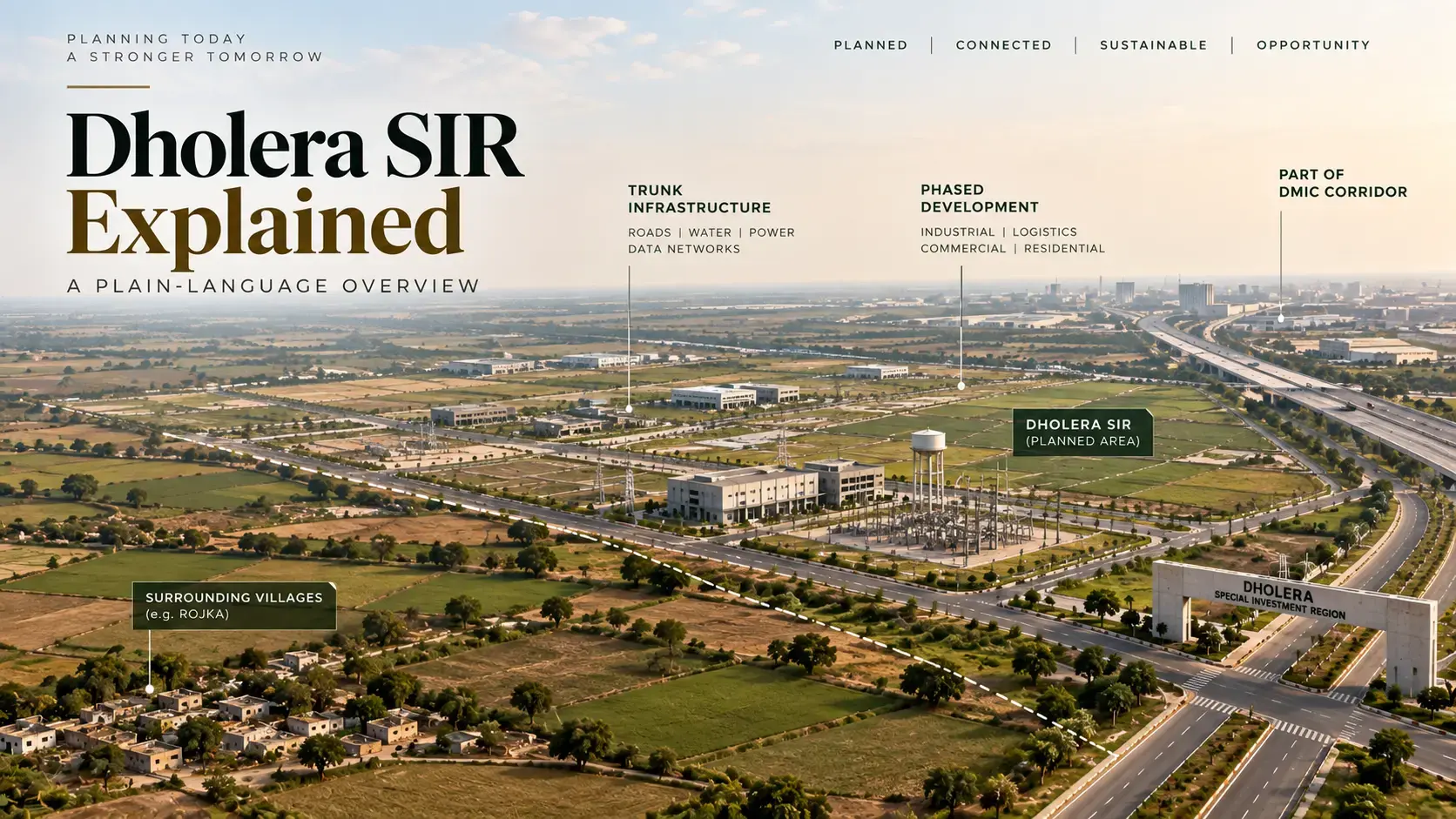
Major infrastructure milestones — the Ahmedabad–Dholera Expressway opening in March 2026, the airport's progress and the industrial announcements around the semiconductor fab — have drawn increased attention to the region. It is worth stating the obvious caveat: correlation is not causation. Connectivity news attracts market interest and attention; it is not a guarantee of price movement.

Why quoted figures differ so much

Quoted rates for Dholera land vary enormously between listings, brokers and trackers. Some of that spread reflects real differences; much of it reflects unverified listings and asking prices that bear little relation to what a given parcel would actually transact for.

  • Plot type and size — large agricultural holdings, small serviced plots and corner parcels all price differently
  • Location — inside the activation area, near planned infrastructure, or in outer villages are different markets
  • Title and classification — clear-title, categorised land differs materially from encumbered or contested parcels
  • Listing price versus transaction price — what is advertised is not what is agreed
  • Date of the quote — figures quoted at different times are not directly comparable

The realistic time horizon

The generally accepted investment horizon for the Dholera region is 7–15 years. Planned development moves in phases — infrastructure first, then industry, then the wider urban ecosystem — and price movement, where it happens, follows that slower rhythm.

Buyers expecting a quick flip rarely match that reality. Regional appreciation, when it occurs, tends to reward those who evaluate carefully and hold for the long term while the project completes its phases.

What buyers should do

Price reports are inputs, not answers. The sound approach remains the same as for any land evaluation: verify facts independently through official records, understand the specific parcel — location, access, classification, title — and visit the ground before any decision.

On pricing of this property specifically, the owner discusses the figure directly during enquiry — without listing agents or portals in between. That is the appropriate place for price conversation, not generic published figures.

Keep Reading

All Articles
CallWhatsAppSite Visit